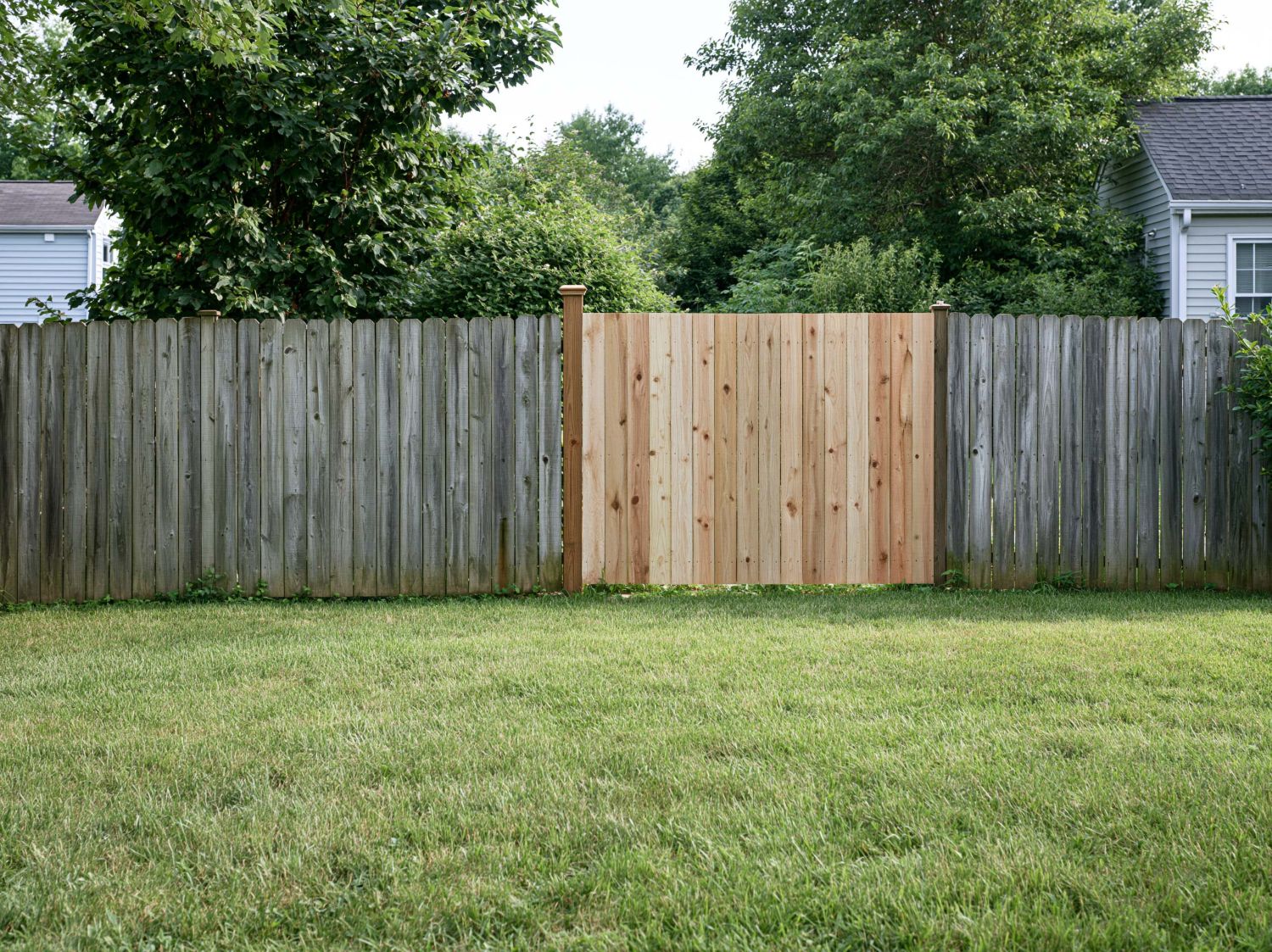
San Antonio Expert Fence builds wood fences in cedar and pressure-treated pine across San Antonio and the cities around it, from a tall privacy fence along the back of the yard to a short picket fence out front.
Privacy, board-on-board, picket and horizontal styles
Front-yard and historic district fences planned to the city's rules
San Antonio Expert Fence can build your fence in either wood, and in a San Antonio yard either one can give you a good fence. Which wood you pick mostly comes down to the look you want, how you plan to finish it and what you'd like to spend. How long the fence stands depends more on the posts and the ground they sit in.
Where the fence runs shapes it too. A solid wood fence in a San Antonio front yard has a lower height limit than one along the back, and a house in one of the city's historic districts has a guide of its own for what a wood fence should look like.
Get Your FREE EstimateTell us what you need and we'll get back to you.
Wood Fence Prices in San Antonio
Here's what wood fences typically cost at Texas prices, installed. Your own figure depends on the wood, the style and how much fence your yard needs, with each gate added on top.
Item
Typical price
Unit
Pine privacy fence, 6 ft
$19–$39
per linear foot installed
Cedar fence
$15–$42
per linear foot installed
Board-on-board or shadowbox fence
$18–$38
per linear foot installed
Wood picket fence, 3–4 ft
$15–$29
per linear foot installed
Walk gate
$190–$780
each, installed
Staining, one side, 6–8 ft fence
$3.25–$7.25
per linear foot
The cedar row covers cedar fencing of any height and style, so it isn't a like-for-like match with the 6-foot pine row. Built the same way, cedar usually costs more than pine. Taking out an old fence, and rocky ground on the north side, are priced once we've seen your yard. Try the cost calculator.
Cedar or Pressure-Treated Pine for Your Fence
Both woods make a good fence here. The difference shows up mostly in the look, in how the boards behave as they age, and in how you plan to finish them.
What Cedar Gives You
Cedar is often chosen for its looks. It has a warm color when it's new, and as it weathers it tends to stay flatter than pine, with less of the cupping you see when a board curls up at the edges after a few summers in the sun. The decay resistance cedar is known for lives in the heartwood, the darker center of the log, and it's rated for wood above the ground, like the boards and rails of a fence.
If you're leaving cedar natural or staining it, the nails and screws matter. Plain steel reacts with the natural tannins in cedar and leaves blue-black streaks running down the boards, so cedar should be put up with stainless or good galvanized fasteners.
What Treated Pine Gives You
Pressure-treated pine is the budget-friendly choice, and it's a sound one. The treatment protects the wood from rot, though it doesn't stop the weather from working on it. Treated pine boards still dry out, crack along the grain and cup a little more than cedar. Treated pine can be stained or painted, and either one slows that weathering down.
How the Two Compare Over Time
Up off the ground, a cedar board and a treated pine board last about the same in a fence, and it's usually the weather that wears them out rather than rot.
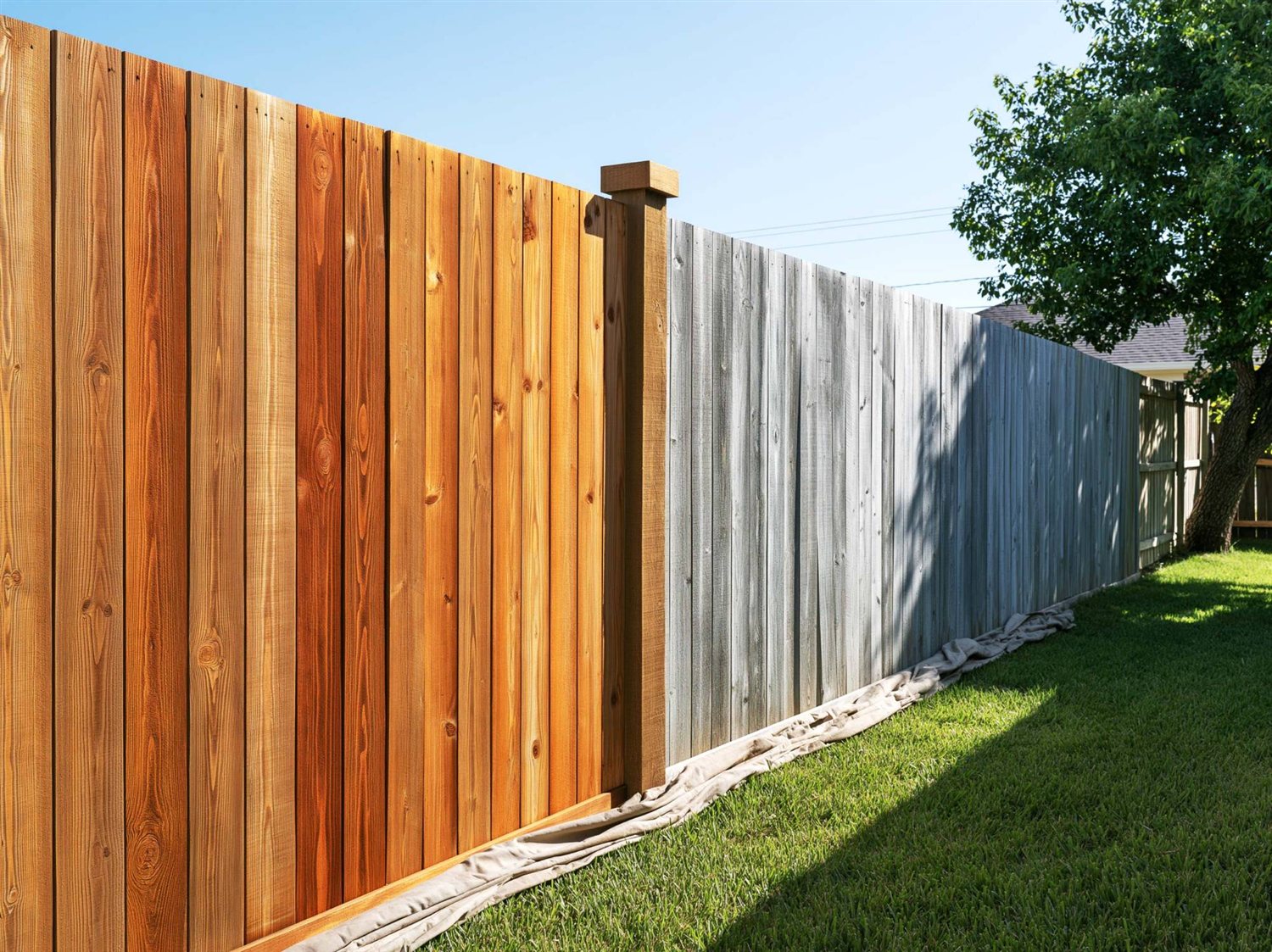
Both Turn Gray
Left bare, either wood fades to a silvery gray under long, hot San Antonio summers. Some people like that look and leave it. If you'd rather keep the color, a stain slows the graying down, and we can stain the fence once the new wood is ready for it.
Wood Fence Styles, From Privacy to Picket
The style decides how much privacy you get, how much light and air come through, and how the fence looks from your neighbor's side. These are the ones you'll be choosing between for a house:
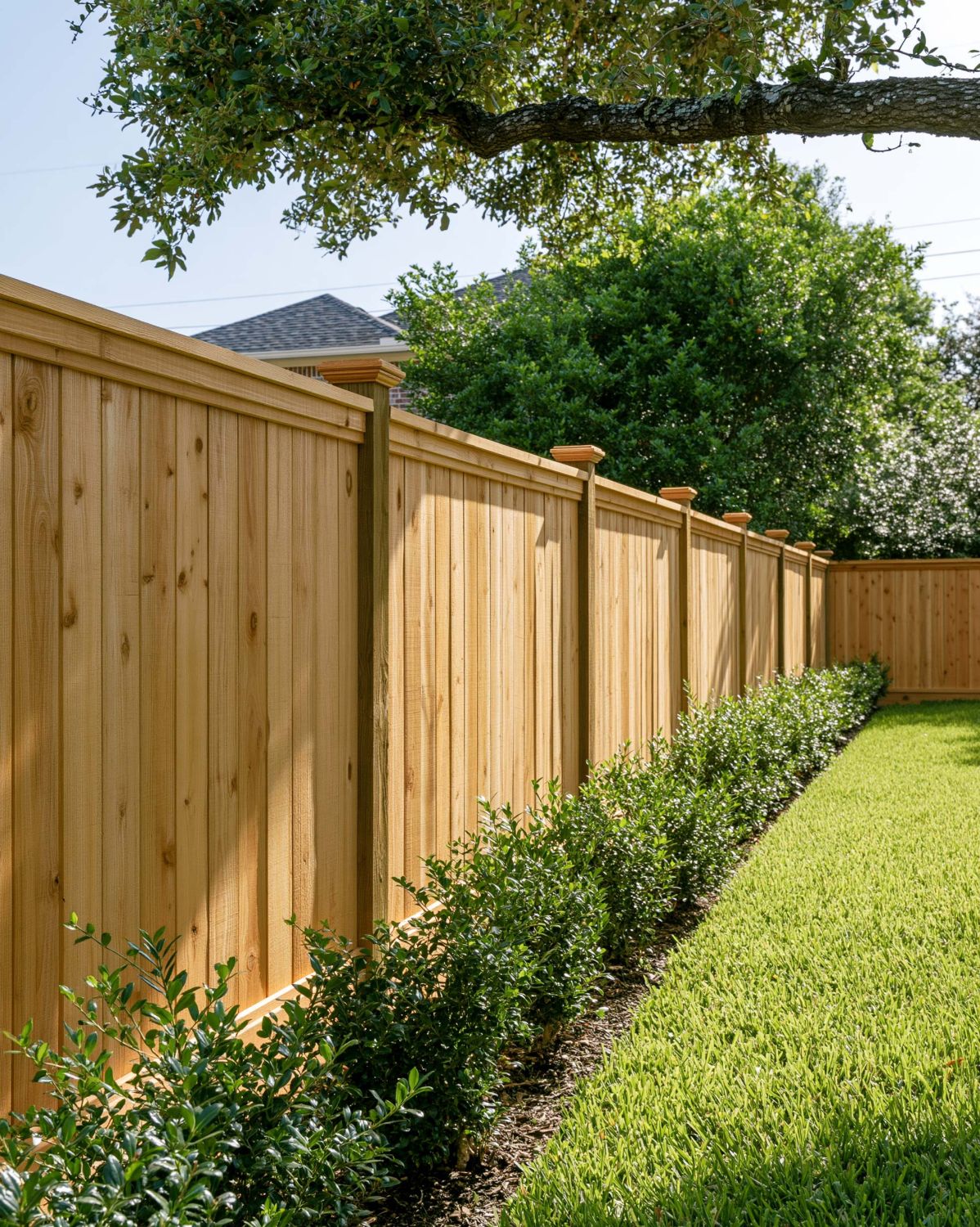
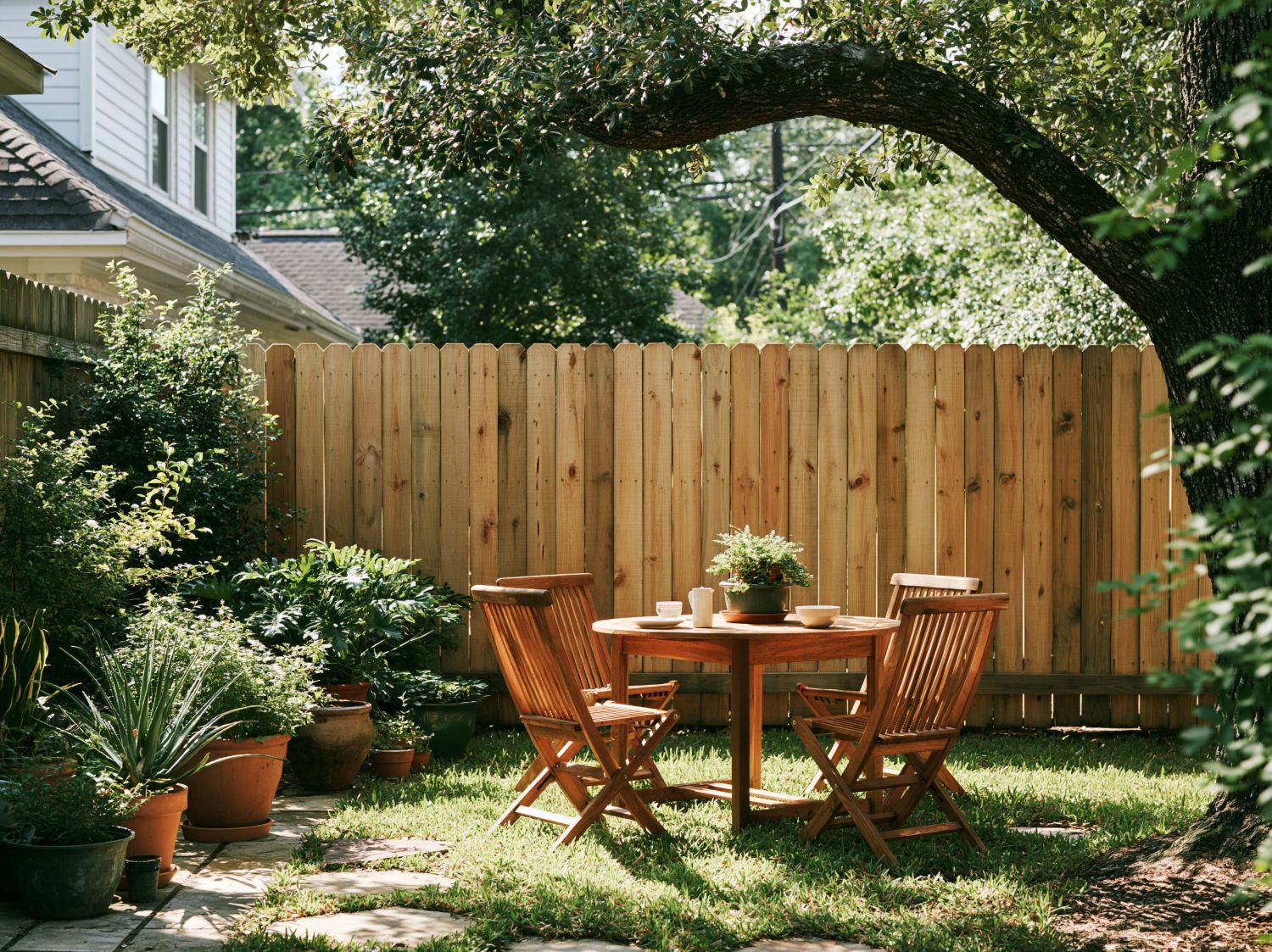
Side-by-side privacy, sometimes called stockade. The boards stand next to each other with no gaps, which makes a solid fence. It's generally the least expensive way to get full privacy.
Board-on-board, also called shadowbox. Two rows of boards, one on each side of the rails, offset so each board covers the gap in the other row. Built tight, you can't see through it; built with a little more space between boards, it lets some air and light through. It looks finished from both sides.
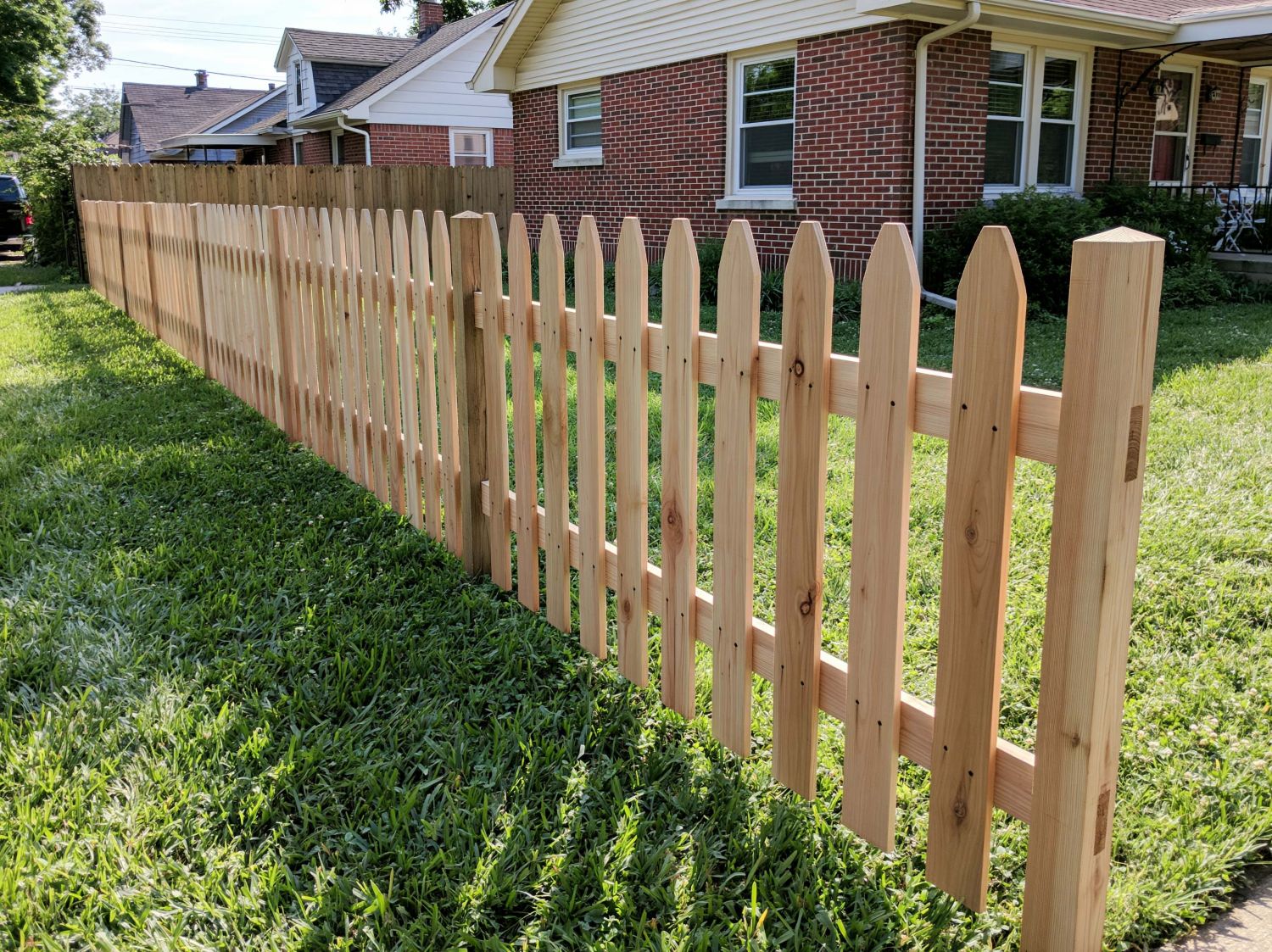
Picket. Spaced boards, often with pointed tops, usually 3 to 4 feet tall. It's the classic front-yard fence, and it works well around a garden too.
Horizontal. The boards run sideways instead of up and down, either tight together or with small gaps. You'll see it more on newer, modern-style homes.
Cap and trim. A finishing touch for a privacy fence: a flat board laid along the top, with a trim board under it, that gives the fence a cleaner, more built look.
Which Style Fits Your Yard
Along the back and sides, where privacy is usually the point, side-by-side and board-on-board are the two to weigh up. Side-by-side is the simpler build. Board-on-board takes more boards for the same length of fence, and in return you get a fence that looks just as good from your neighbor's yard as from yours, which is worth thinking about on a shared fence line. Either one can take a cap and trim on top if you'd like it to look a little more finished.
Out front, picket is the usual wood choice, and a horizontal fence can look sharp across the front of a modern house.
Gates to Match
Whatever style you pick, the walk gate is built to match it, in the same boards and the same height, so it sits in the fence instead of standing out from it. If you need room to get a mower or a trailer through, a wider gate or a pair of gates can be planned in at the same time.
Where a Wood Fence Meets the Ground
The boards and rails of a wood fence sit up in the air and dry out after every rain. The posts have a harder job. The bottom of each one sits in soil that holds moisture, and right where the post comes out of the ground the wood has both moisture and air, which is what rot needs to get going. That contact with the soil is also how termites get in. So the posts are the part of a wood fence worth getting right from the start.
Posts Rated for the Ground
Treated lumber is sold by where it's meant to be used, and the tag on the end of a board or post should say which. Boards and rails are treated for above-ground use, rated UC3B. A fence post should be treated for ground contact, rated UC4A, because it's going to spend its life with one end in the dirt.
That's also why a cedar fence is often built on treated pine posts. Cedar's natural resistance is rated for wood above the ground, not in it, and the Forest Service generally recommends treated wood over naturally resistant heartwood where decay conditions are severe. Cedar boards on treated posts give you the look of cedar and posts made for the soil.
Keeping the Rest of the Wood Off the Soil
The posts should be the only wood touching the ground. We set the bottom of the boards to clear the soil, and over the years it helps to keep mulch, dirt and leaves from piling up against them. Wood that sits in damp mulch, dirt or leaves starts to behave like wood in the ground.
Clay, Limestone and Live Oaks
The ground itself changes across town, from black clay that shrinks and swells with the seasons through the middle of the county to thin, stony soil over limestone on the north side, and we set your posts for whichever one your yard has. If a live oak branch has to come off to make room for the new fence, the city's oak wilt ordinance requires the cut to be painted within 30 minutes, so that's worth planning before the work starts.
Wood Fences in San Antonio Front Yards and Historic Districts
A back yard privacy fence is the simple case. Out front, and in the older parts of town, the city has more to say about what a wood fence can be.
The Front Yard
The city counts everything in front of the front face of your house as the front yard, and the height rules there are different from the back. A solid fence in the front yard stops at 3 feet. Above that, up to 5 feet, the fence has to be mostly open, at least 70% open by the city's definition, which is why iron and widely spaced pickets suit a taller front fence.
That 70% is worth knowing if you're picturing a wood picket fence out front. If the gaps between your pickets are narrower than the pickets themselves, less than half of the fence is open, and above 3 feet it wouldn't count as open under that definition. So a picket fence taller than 3 feet needs generous spacing, and we lay out front pickets with the city's definition in mind.
Historic Districts
If your home is in one of San Antonio's historic districts, such as King William or Monte Vista, the city's historic preservation office has a fences policy guide, and it covers wood fences out front and in back:
Out front, painted wood picket is one of the most common fence types the guide treats as appropriate, especially for Craftsman, Colonial and Folk Victorian houses. Front fences should match the heights of neighboring fences or stay at 4 feet, and a 4-foot picket still needs the open spacing a front yard calls for.
In back, the guide calls for privacy fences in wood, no taller than 6 feet, and set back from the front of the house rather than lined up with it.
Any fence work on a historic property, front or back, needs the office's approval, called a Certificate of Appropriateness, and the guide requires a measured drawing or an example photo of the fence you're proposing. We draw up the fence and put that together with you.
Painting a Wood Picket Fence
A painted fence holds up better when water can't soak in through the cut ends of the boards, so before the paint goes on, we seal the end grain on the pickets, rails and post tops. It's a small step that helps the paint last on a fence that stands out in the weather all year.
From Your First Call to a Finished Wood Fence
Tell Us What You're Picturing
Send the form with a line about the fence you have in mind, whether that's a wood and a style or just where it needs to go, and we'll call you back to find a time to come out.
We Measure the Fence Line
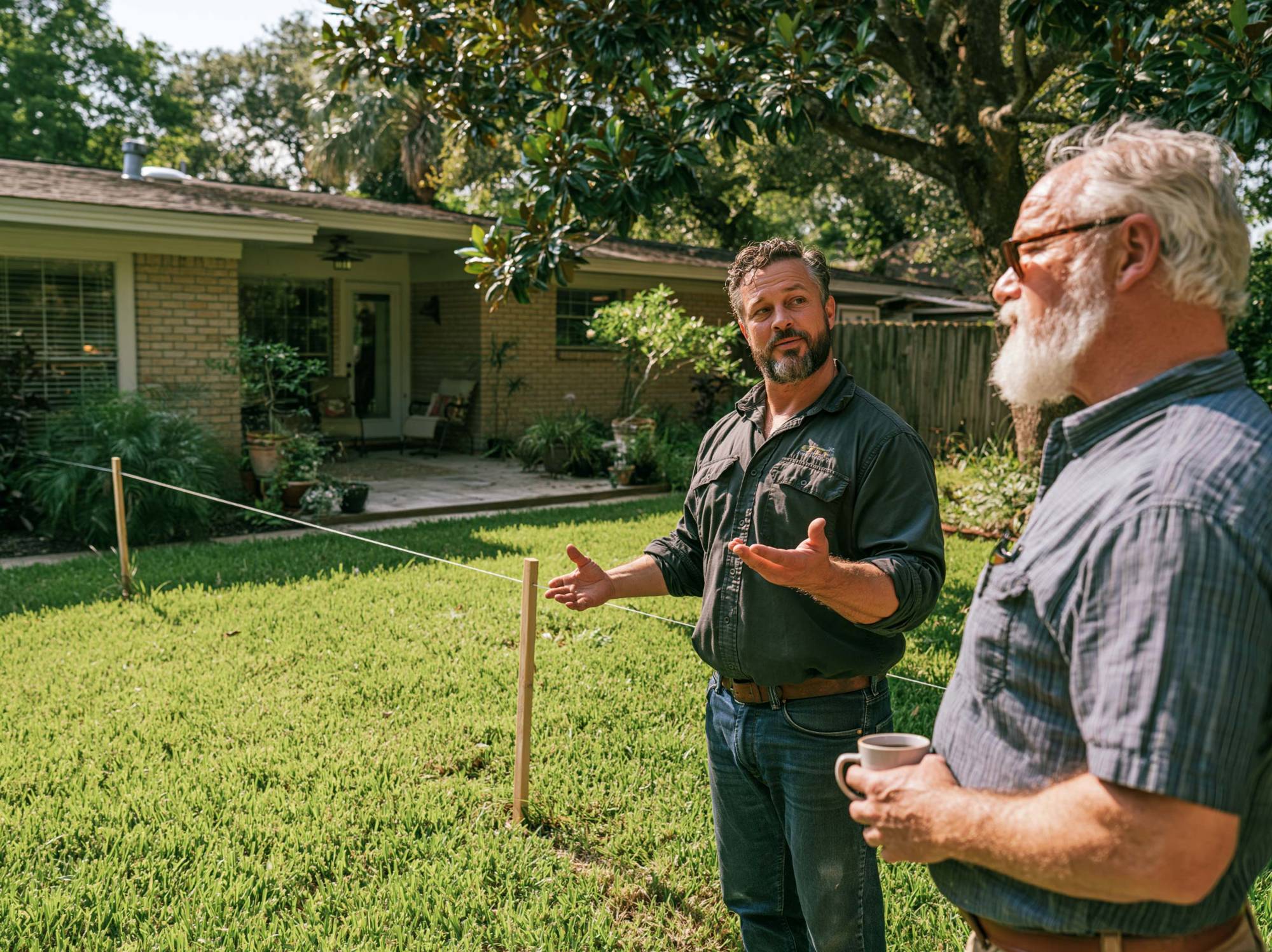
We measure where the fence will run and note the trees, slopes, gates and neighboring fences it has to work around.
Wood, Style and Height
We go over cedar or pine, the style and the height with you, inside what your city allows.
One Price, Then the Order
You get one price for the fence, the gates and anything you add, like a cap and trim or a stain, and no lumber is ordered until you're happy with it.
Permit and Posts
When the job needs the city's fence permit, we handle it. Then the posts go in, and once they're set, the rails and boards follow.
A Look Along the Finished Fence
We go along the finished fence with you, open and close every gate, and make sure you're happy with how it turned out.
Wood Fences in San Antonio: Frequently Asked Questions
How much does a wood fence cost in San Antonio?
Wood fences are priced by the foot, with gates added on. At typical Texas prices, 150 feet of 6-foot pine privacy fence comes to roughly $2,850 to $5,850 installed, before any gates. Cedar, board-on-board and picket fences are priced the same way, each at its own rate per foot.
Do termites go after wood fences in San Antonio?
They can. The termite found most often in San Antonio homes is the native subterranean termite, which nests in the soil and gets into wood wherever wood touches the ground, so a fence post is within reach. Formosan termites have been found in Bexar County as well, though there's little chance of running into them away from the upper Gulf Coast. Cedar isn't on the Forest Service's short list of termite-resistant woods, so picking cedar isn't a way to keep termites out. Where a fence ties into your house, that post is wood in the soil right beside your home, which is one more reason it should be a post rated for ground contact.
Can a wood fence have metal posts?
Yes. Metal posts can carry a wood fence, with the rails and boards fastened to them, and some people choose them because they're unlikely to rot at the ground line and termites can't eat them. They cost a little more than wood posts. Treated wood posts rated for ground contact, set in concrete, are the other way to go. If you're torn between the two, we can price your fence both ways so you can compare them side by side.
How tall can a wood privacy fence be in San Antonio?
Along the side and back of a San Antonio house, a fence can be 6 feet tall, which is the height the pine privacy price above is based on. A few situations allow 8 feet, such as a back yard that slopes or a pool in your yard or your neighbor's. If your home is in one of the nearby cities rather than San Antonio itself, that city's rules apply instead, and they don't always match San Antonio's, including how tall a side or back fence can be.
Can you build a new wood fence on my old posts?
Sometimes. If your posts are solid at the ground, standing straight and spaced to suit the new boards and rails, they may be worth keeping. We check each one where it comes out of the ground, since that's where a post goes soft first. When most of them are sound, we can replace the few that aren't and build the new fence on the rest. If a lot of them have gone soft, starting with new posts gives your new fence a better footing.
Does my HOA get a say in my wood fence?
If your neighborhood has an HOA, it may well. Texas law lets an association regulate the type of fencing, and an HOA's rules can cover the wood, the style or the stain color. It's simplest to know your HOA's rules before anything is ordered, so the fence goes up once and stays. If your board wants to see the plan first, we can give them a sketch of the fence and a materials list to approve.
We take wood fence jobs across San Antonio and in the nearby cities below. If your home is in one of those cities, your fence is planned to that city's rules rather than San Antonio's.
San Antonio Expert Fence is a fence company in San Antonio, Texas, for homes, businesses and HOAs. We repair fences and build new ones, and every job starts with a free visit and a written price.
Each city around San Antonio writes its own fence rules, and we plan every fence to the ones where your home is.